
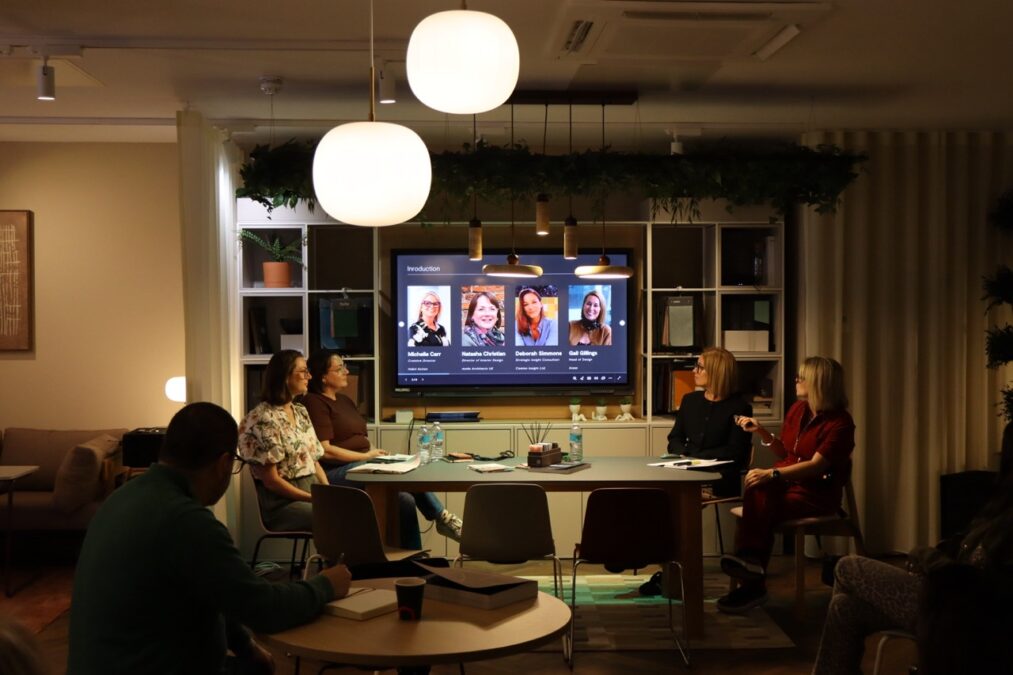
During Clerkenwell Design Week, we brought together designers, workplace strategists and clients for a panel discussion in our showroom alongside Workagile, PlantCare & Calibo. The focus was simple on the surface, but increasingly complex in practice: what comfort means in today’s workplace, and how design can better support it.
The Office Now Has to Deliver More
Expectations of the workplace have shifted significantly. Over the past few years, people have become used to having greater control over their environment, particularly when working from home.
As a result, the office needs to offer something more intentional. It’s no longer just a place to work, but one that needs to support productivity, collaboration and wellbeing in a way that feels worthwhile. The most successful spaces are those that remove friction and give people a clear reason to be there.
Comfort Comes From Choice
A key theme throughout the discussion was that comfort is not universal. What works for one person can be distracting or unhelpful for another.
Some people thrive in busy, social environments, while others need quieter areas to focus. Rather than trying to strike a single balance, workplaces benefit from offering a range of settings that support different tasks and preferences.
This variety allows people to choose how and where they work across the day, which in turn leads to better outcomes, both individually and collectively.
Looking Beyond the Obvious
Comfort is often associated with furniture and layout, but the conversation highlighted how much deeper it goes.
Factors such as lighting, acoustics and temperature all play a role, alongside materiality, colour and the integration of natural elements. Even small details can influence how a space feels over time, whether that’s glare from lighting or the general sensory quality of a space.
When these elements are considered together, the workplace becomes more supportive without needing to overcompensate in any one area.
Designing Spaces That Speak for Themselves
Another important point was how design can guide behaviour.
Through considered use of materials, colour and layout, spaces can communicate their purpose without relying on signage. A quieter area should feel instinctively calm and enclosed, while collaborative zones should feel open and inviting.
When this is done well, people naturally understand how to use the space, which creates a smoother and more intuitive experience overall.
What Happens After Handover
The conversation also touched on an area that is often overlooked: what happens once a workplace is in use.
Real insight comes from observing how people actually interact with a space over time. Patterns of use, areas of friction and day-to-day feedback all reveal whether the design is truly working as intended.
In many cases, it’s not a complete redesign that’s needed, but a series of smaller refinements. Adjusting lighting levels, improving acoustics in key areas or rebalancing how spaces are used can make a meaningful difference.
Treating the workplace as something that evolves, rather than something that is finished, allows it to stay aligned with the people using it.
Designing for People, Not Just Spaces
Ultimately, the discussion reinforced that comfort-led design is about more than aesthetics.
It’s about creating environments that support performance, inclusion and wellbeing, while also reflecting how people genuinely want to work. For organisations, this means thinking carefully about how each element of a space contributes to the overall experience.
The workplaces that stand out are not necessarily the most complex, but the ones that are the most considered. Spaces that offer choice, respond to feedback and continue to adapt over time will always feel more relevant.