
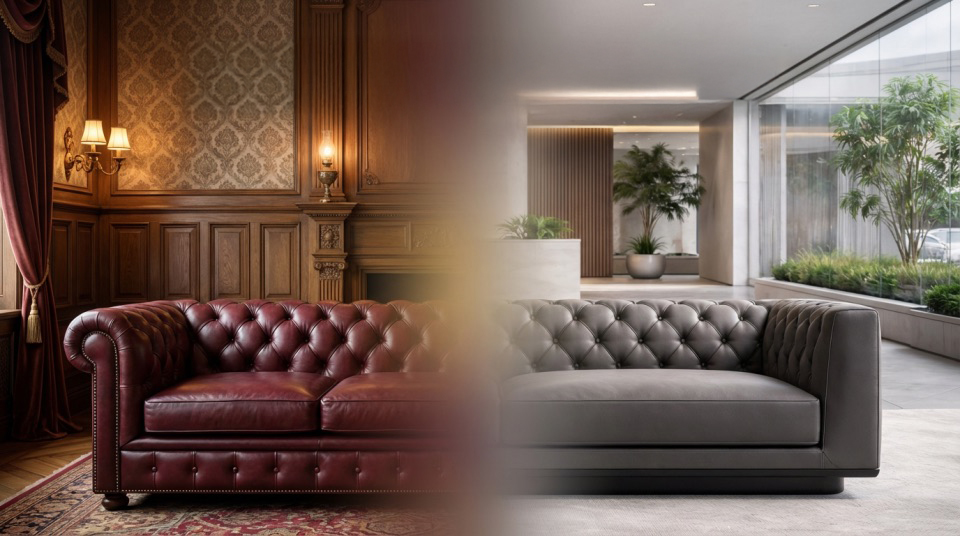
Walk into a design-forward hotel lobby or contemporary office reception area lately, and you might be surprised to see a Chesterfield sofa. That deep button tufting and classic silhouette that usually belongs in wood-panelled private clubs is showing up in tech startup lounges, boutique hotels, and modern restaurants.
But here’s the thing: they’re not the traditional Chesterfields your grandfather knew.
Why Commercial Spaces Want Them (But Not the Victorian Version)
Chesterfields solve a tricky problem for commercial interiors. You need furniture that projects sophistication and makes the right impression, but it also has to be comfortable enough that people actually want to sit on it and durable enough to handle constant use.
The iconic tufting and structured form signal quality and attention to detail. Hotels have used them for decades to communicate luxury. Office reception areas use them to project professionalism without stuffiness. Even Google has incorporated leather Chesterfields in their lobbies.
But the traditional Victorian version, with its scrolled arms, ornate turned legs, and bulky proportions, doesn’t quite work in contemporary spaces. It reads as costume furniture rather than intentional design.
What Needs to Change
Based on recent commercial design trends, the overly ornate traditional Chesterfields are falling out of favour. Spaces want the sophistication without the heaviness.
What’s actually working in modern commercial interiors are versions that keep the signature tufting but update everything else:
Cleaner Silhouettes – The boxy, overstuffed Victorian form doesn’t fit contemporary spaces. Streamlined profiles with straight lines and lower profiles work better, especially in restaurants and co-working spaces where you don’t want the furniture dominating the room.
Modern Arm Styles – Those big scrolled arms are a problem. They take up too much visual and physical space. Track arms or straight arms with the same height as the backrest create a more architectural, contained look that fits current aesthetics.
Simplified Bases – Traditional turned wooden legs with brass casters look dated. Recessed plinth bases or slim metal legs in matte black give a contemporary edge while maintaining the elevated, quality feel.
Contemporary Colours – Oxblood leather and cognac brown are tough to work with in modern schemes. Charcoal, slate grey, navy, even muted olive or deep teal in quality leather or performance fabrics integrate more naturally. Boutique hotels are using these tones to bridge traditional craftsmanship with contemporary palettes.
Functional Comfort – The fully tufted seat cushions of traditional Chesterfields aren’t actually that comfortable for extended sitting. Smooth, supportive seat cushions with tufting reserved for the back and arms offer better comfort for office lounges and restaurant booth seating.
Where the Modern Version Works
We’re seeing updated Chesterfield designs succeed in specific commercial applications:
Corporate reception areas use them in charcoal or navy leather with glass side tables and contemporary task lighting. The structured form projects professionalism, but the updated proportions keep it from feeling like a banking hall from 1890.
Boutique hotels are placing them in lobbies and cocktail lounges, choosing slate gray or deep green upholstery that photographs well and creates memorable spaces without the stuffiness of traditional leather.
Restaurants and bars are using booth configurations with high backs for privacy, but opting for straight arms and contemporary colours that align with their overall concept rather than fighting against it.
Co-working spaces want that “living room meets workspace” aesthetic. A Chesterfield with updated proportions, mid-tone upholstery, and modern bases achieves the comfort and approachability they need while maintaining a professional edge for client meetings.
The Bottom Line
Does the Chesterfield still have a place in modern commercial design? Yes, but only if it’s been thoughtfully updated for contemporary spaces.
The design elements that make Chesterfields valuable (quality signalling, structured form, proven durability, comfortable seating) are still relevant. The Victorian costume elements (scrolled arms, ornate legs, bulky proportions, traditional colours) are what’s holding them back.
Commercial spaces need pieces that bridge traditional craftsmanship with modern aesthetics. A Chesterfield that keeps the iconic tufting but updates the silhouette, arms, base, and colour palette can work in contexts where the traditional version simply can’t.
The question isn’t whether Chesterfields belong in modern workspaces and hospitality environments. It’s whether manufacturers are willing to evolve the design for how these spaces actually look and function today.