
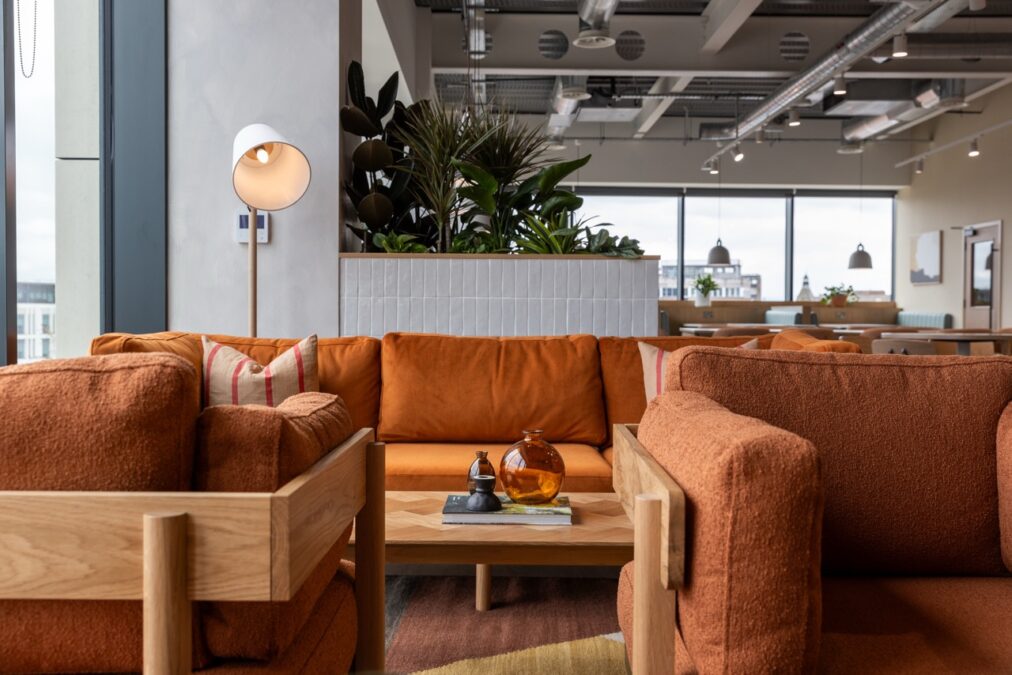
Walk into a workspace upholstered entirely in grey and notice how it feels. Then walk into one with warm terracotta tones or deep forest greens. The difference isn’t subtle, and it’s not just aesthetic preference. Fabric shapes how people experience a workplace every single day.
Colour Sets The Emotional Temperature
Colour psychology isn’t pseudoscience when you’re specifying furniture that people interact with for eight hours daily. Blues and greens create calm, focused environments that work well for concentrated tasks. Warmer tones like oranges and reds generate energy and encourage conversation, making them natural choices for collaborative zones and breakout areas. A finance team probably needs different colour psychology than a creative agency. The fabric you choose establishes the emotional baseline of a space before anyone’s done a day’s work there.
Texture Changes How Space Feels
Smooth, tight-weave fabrics read as formal and controlled. Tactile, textured materials feel approachable and relaxed. This matters because people make judgements about organisational culture within moments of entering a space, and upholstery is one of the first things they’ll physically touch. A law firm’s reception area upholstered in soft leather communicates established success. That same choice in a tech startup’s collaboration space would feel stiff and out of place. Texture tells people how they’re expected to behave in a space.
Pattern Influences Energy Levels
Solid fabrics create calm, unified environments where nothing competes for attention. Geometric patterns add dynamism and visual interest, raising energy levels and signalling modernity. Organic patterns can soften corporate environments and bring warmth without sacrificing professionalism. The scale of pattern matters too. Large, bold patterns make statements and create focal points, whilst subtle textures add interest without demanding attention. In open-plan offices where visual complexity already runs high, pattern choices either contribute to cognitive overload or provide welcome visual anchors.
Material Communicates Values
Natural materials like wool and linen signal environmental awareness and quality. They also bring inherent texture and depth that synthetic fabrics have to work harder to achieve. High-performance synthetics can look incredibly sophisticated whilst offering practical benefits, but they communicate differently about organisational priorities. Increasingly, visible sustainability matters to employees and clients alike. The material story behind your fabric choices becomes part of the workplace narrative, particularly for organisations where environmental credentials matter to recruitment and retention.
Finish Affects Perceived Quality
Matt finishes feel contemporary and understated. Slight sheen adds luxury and visual interest, catching light as people move through a space. High-gloss or metallic finishes make bold statements but can feel cold in large quantities. The finish you specify changes how light interacts with furniture throughout the day, affecting the overall atmosphere as natural light shifts. A space can feel entirely different at 9am versus 3pm based on how fabric finishes respond to changing light conditions.
The Long Game
Fabric choices compound over time. People develop emotional responses to their physical environment that affect everything from productivity to retention. A workspace that feels energising on day one but becomes visually exhausting by month six has failed. Equally, a space that feels too sterile or controlled can dampen creativity and collaboration. Getting fabric specification right means understanding not just how it looks in isolation, but how it performs psychologically across months and years of daily exposure.
The furniture will be there long after the initial installation. Make sure the fabric supports the culture you’re trying to create, not just the aesthetic you’re trying to achieve.